Ghostbusters: Afterlife
MOVIE
Licorice Pizza
Director Paul Thomas Anderson
Review Ray Chan
Graphic slang for a vinyl record, the term 'licorice pizza' is also the name of a long-gone chain of LA record shops founded by James Greenwood in 1969 … the era and place of Paul Thomas Anderson’s latest foray into teenage angst and navigation of first love.
The running time of the movie is two hours and 13 minutes, and indeed it seems that running is what most of the cast do. Protagonist Gary Valentine (Cooper Hoffman) is seen racing toward a gas station, past a line of idling vehicles, against a backdrop of David Bowie’s “Life on Mars?”. For her part, the heroine, Alana Kane (Alana Haim), sprints to a police station, after Gary has been wrongly arrested. Later on, Gary spurts away from his pinball arcade in anger. And, at the climax, they both scamper again — Alana from one direction and Gary in the other, to meet in the middle.
Is there a reason? Perhaps it’s to symbolise the pursuit of happiness, which is essentially what the film is about.
It’s set in the San Fernando Valley, in the early 70s, when cars are queueing for gas because of a global oil emergency, and Richard Nixon is beseeching Americans to trim their fuel consumption.
The pair first meet up at high school where 15-year-old Gary is attracted to Alana, who is 10 years older and works for a photographer taking head shots for the yearbook.
Displaying a maturity beyond his years, Gary chats up Alana and seeks a date, his well-meaning confidence borne out of a short career as a child star. His penchant for showmanship and eye for money-making ventures soon lead him to opening up a water bed store, and later the pinball business, with Alana lending moral support.
There isn’t much of a plot to this movie. It’s more like a Seinfeld episode, where things just happen but nothing really happens.
We get weird one-off episodes such as Bradley Cooper portraying Jon Peters, Barbra Streisand’s paramour, who dresses in angelic white and behaves like a dirty devil. Then Sean Penn appears as Jack Holden, a former Hollywood idol who flirts with Alana, and is friends with an aging director played superbly by the wonderful Tom Waits.
Most humorous of all is Harriet Sansom Harris, who steals the show as a patronising casting agent, most of it spent on the phone (“love to Tatum”) and framed in so extreme a close-up by Anderson’s trademark roving camera that even her dentist will be impressed.
Cooper, the son of Philip Seymour Hoffman, who himself was so long a stalwart of Anderson’s work, is never less than endearing, and allows us to soak in Gary’s belief in himself. Shining equally bright is Haim, whose Alana demonstrates a spiky self-doubt and sense of arrested development that dovetails perfectly with Gary’s own accelerated adulthood and restless urge to reinvent. Not bad going for two actors making their professional debuts.
Busy and thronging, rammed with cameos and comic turns, and sewn together with a soundtrack of the times, Licorice Pizza works best when it’s focused on the pair. The movie basically hangs on the rapport between Gary and Alana — more than a friendship, less than a love story, and sometimes a power struggle.
An entire Golden Age of on-screen romance teased viewers with “Will they or won’t they”; here, that question is bracketed not just by Alana and Gary’s age difference but by entrepenurial ambitions that converge and diverge with hit-and-miss unpredictability.
#licoricepizza #universal
MOVIE
In The Heights
Director John M Chu
Review Ray Chan
MOVIE
A Quiet Place Pt II
Emily Blunt, Millicent Simmonds
Director John Krasinski
Review Ray Chan
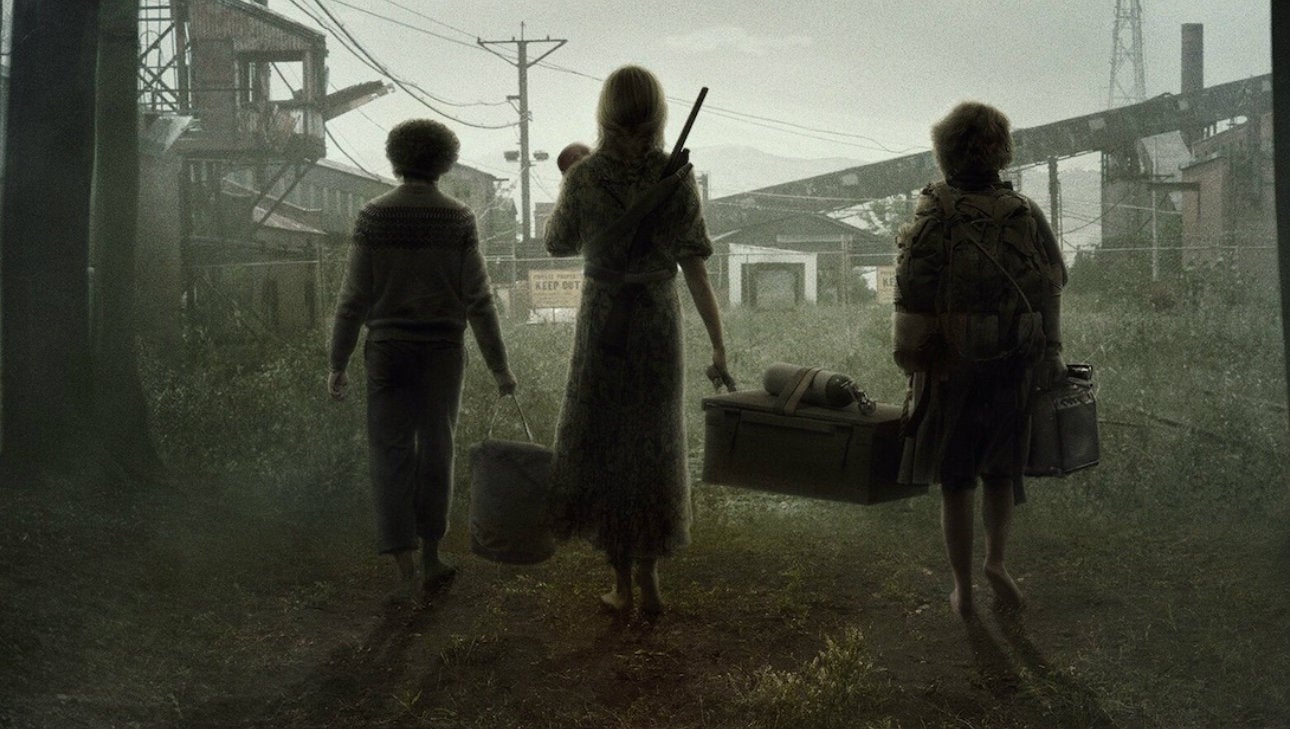
A Quiet Place Part II is
quite literally a sequel, picking up directly where its preceding chapter left
off.
Unlike many offerings
where the follow-ups do not necessarily occur immediately after the initial episode,
Part II is set mere hours later, extrapolating on the first instalment’s
cliffhanger ending, which had resilient mother
Evelyn Abbott (Emily Blunt) killing off inhuman attackers who were threatening
her and her kids: hearing-impaired Regan and introverted Marcus (Millicent
Simmonds, Noah Jupe).
But there’s a prelude
before the story continues, in which the viewer is taken back to the very
moment the Abbott clan witnessed first-hand the horrific experience that would
forever disrupt and change their lives.
Via the
flashback, we see how the Abbotts reacted to Earth’s new apex predator – blind, emaciated beings with chitinous armour and an acute sense of hearing – and provides an inkling of where they came from.
Flash forward
474 days, and the surviving members — including Evelyn’s newborn baby whose
crying could cost them all their lives — must leave their farm and seek shelter
at one of the other post-apocalyptic encampments, marked by bonfires on the
horizon.
Still living
by a code of silence lest they give their presence away, the Abbotts are lucky
that the first person they meet is an old friend, Emmett (Cillian Murphy),
who’s been hiding out in an abandoned steel mill. It takes some convincing to
guilt him into helping them, but he soon turns out to be a de facto father figure, much like self-sacrificing family patriarch Lee (played by director Krasinski) from the first movie.
The two
leading ladies again take on prominent roles — especially fan favorite Regan,
whose cochlear implant already provided an almost-too-convenient defense
against the aliens.
It’s Regan’s
idea to find the nearest radio station and use her hearing aid to broadcast a
signal that could defeat the beasts once and for all. For one so young, Simmonds sparkles with her ability to demonstrate focus and ferocity, intelligence and composure.
Getting there
is doubly dangerous though, as she and Emmett encounter horrors both human and
alien along the way.
Indeed, this is just one
part of an overly complex, three-pronged arc that breaks up the family unit and
relegates Blunt to the background.
One story features Emmett
and Regan in the woods, off on their own odyssey, another Evelyn heading back
to town for medical supplies, while adjacent to that one, Marcus has to tend to
the baby, while also fending off one of the multi-toothed critters.
It’s perhaps an attempt at
a cross-cutting editing technique that appears too ambitious – but kudos for
the effort.
Interestingly, while Part II finished production well over a year ago, some observers might feel there is a deliberate allegorical attempt to link the creatures with the pandemic, which ironically kept the feature’s release in check.
Indeed, a world where everyone has to stay inside, not talking to strangers, mistrusting all the rest of “those people” out there, feels all too familiar. Hell, even the monsters’ heads look like enlarged COVID molecules.
Symbolically, the metaphor of familial strength and the “terror” of parenthood (whether offspring can truly be kept safe, no matter what) still come to the fore, but this film also floats the notion of survival and salvation for those who may not be worthy of it.
However, before audiences can catch their breath and even start to ponder about the themes, it ends on such an abrupt note that they might not find true emotional closure … at least, not until the next inevitable part of the franchise .
#AQuietPlace #nrcagency
MOVIE
Mortal Kombat
Lewis Tan, Jessica McNamee, Josh Lawson
Director Simon McQuoid
Review Ray Chan
You’d be surprised to learn that for every person who has played Mortal Kombat – considered one of the best fighting video games of all time – there’s an equal number, or indeed more, who’ve never even heard of it.
So let’s briefly recap for the uninitiated. At the heart of the game is the tussle between the player and an opponent of his choice in a one-on-one match, involving various combat moves and attacks. The trademark feature is the Fatality, a finishing move executed against a defeated rival to kill them in a gruesome fashion, some of which have become almost iconic. Indeed, it is often the prime reward for many victorious players, who take macabre pleasure in seeing what form the Fatalities take.
In the single-player game, the player faces each of the seven playable characters in a series of battles, after which he must then fight in three endurance matches, each of which involves two opponents. After the third endurance match, the player fights the four-armed Goro, followed by a final match against Shang Tsung, the main villain of the piece.
The challenge for any moviemaker then is to take the simplicity of this fighting platform, and build any sort of storyline around it, incorporating all the various characters, elements, and yes, even the Fatalities. Especially the Fatalities, in fact.
This 2021 cinematic version of Mortal Kombat follows on from two previous efforts, the second of which was universally panned for its low budget effects, poor plot and endless fight scenes. So this time round, screenwriters Greg Russo and Dave Callaham, director Simon McQuoid and producer James Wan have been careful to learn from previous misjudgments, pulling out all the stops with the aim of making it the necessary reboot this title required.
Here, the lore of the series is brought to a grand and epic scale, showing off the crowded roster of individuals.
Backed up by some beautiful cinematography, stellar fight choreography and physical stunts that defy logic and gravity, the impressive action sequences brim with energy and excitement, with many based on those found in the video game, such as bicycle kicks and juggling maneouvres.
It’s replete with lashings of gore, violence, and blood to echo everything that’s a staple of the enduring legacy of this brutal series. There are enough scenes of exploding heads, severed limbs, people split in two, gored bodies and entrail displacements to warrant the extreme R rating, but really, these days the shock effect is minimal because almost everyone has been accustomed to the wizardry that special effects creators can generate.
There’s a stronger attempt than in the previous movies to tie up the settings into a cohesive story, although as might be expected, personal development is light and the premise slightly stilted.
But there’s one definite character improvement which stands out, which truly sets this apart from other video game adaptations where the cast consists of humdrum individuals.
The scoundrel Kano, played brilliantly by Josh Lawson, has been transformed into a dinky-di Ocker with wisecracking one-liners and a foul mouth that would make a sailor blush.
The interpretation completely steals the show, bringing pure, unadulterated joy and injecting some much-needed levity at every turn, so much so that when Kano is not on screen, he is genuinely missed.
Essentially though, Mortal Kombat is a film crafted almost exclusively for diehard fans, but this time arguably done correctly.
Despite McQuoid’s claim of taking one step at a time, this movie is clearly planned as a new franchise for Warner Bros, with many Easter egg references and enough bait to set up a sequel should this entry perform well at the box office.
And if the wait for a follow-up is too long, surely an interim one-off featuring Lawson as Kano would be worth considering.
*The Australian force is strong in this production. Lawson, McQuoid and Wan all hail from the big country, with most of the movie also shot in South Australia.*
#mortalkombat #universal
MOVIE Supergirl Director Craig Gillespie Review Ray Chan The film begins with a super-powered dog relieving itself in spectacular fashio...